Learning that you may need full-mouth reconstruction can feel overwhelming, especially if you’re unsure what the process involves. Many patients wonder whether treatment begins at the first appointment, how extensive the evaluation will be, or what information is needed before recommendations can be made.
In most cases, the first visit focuses on understanding your oral health rather than beginning treatment. A consultation allows your prosthodontist to evaluate your teeth, bite, and supporting structures while learning about your concerns and goals. This information forms the foundation of a personalized restorative strategy designed to improve function, comfort, and the appearance of your smile.
Understanding Full-Mouth Reconstruction
Full-mouth reconstruction, sometimes called full-mouth rehabilitation, involves restoring multiple teeth and supporting structures when oral health, function, or bite stability has been significantly affected.
A consultation may be recommended if you have:
- Multiple missing teeth
- Extensive tooth wear
- Failing crowns, bridges, or other restorations
- Broken or severely damaged teeth
- Bite problems
- Difficulty chewing comfortably
- Complex restorative concerns
Because every patient’s situation is unique, recommendations are based on a detailed prosthodontic evaluation rather than a standard treatment approach.
Reviewing Your Medical and Dental History
Your consultation begins with a conversation about your health, previous dental treatment, and goals for your smile. Understanding your medical history, existing dental work, current symptoms, and lifestyle helps your prosthodontist identify factors that may influence restorative care.
This discussion also gives you the opportunity to share concerns, describe functional challenges, and ask questions before any recommendations are made. Gathering this information early supports more informed clinical decisions and ensures your care is tailored to your individual needs.
A Comprehensive Clinical Examination
Following your consultation, your prosthodontist performs a detailed examination of your teeth, gums, supporting structures, and overall oral condition.
The evaluation may include assessing:
- Tooth wear
- Existing restorations
- Missing teeth
- Gum health
- Remaining tooth structure
- Overall oral stability
Rather than focusing on a single tooth or isolated concern, the examination considers how every part of your mouth functions together. This broader perspective is one of the defining features of prosthodontic care and is essential when planning complex restorative treatment.
Advanced Digital Diagnostics
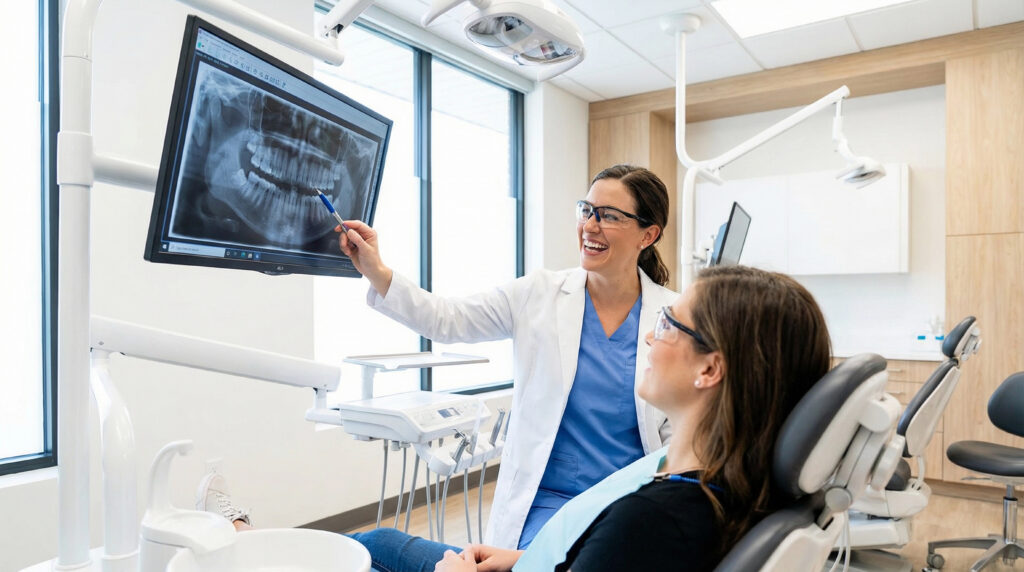
Planning full-mouth reconstruction requires detailed diagnostic information. Depending on your needs, your evaluation may include digital imaging and other advanced technologies that provide a clearer understanding of your oral structures.
These diagnostic records support accurate evaluations, improve communication, and help your prosthodontist explain treatment recommendations more effectively. They also allow patients to better understand their oral condition and how each phase of treatment contributes to restoring function and stability.
Evaluating Bite Function
One of the most important aspects of a prosthodontic consultation is evaluating how your teeth function together.
Your bite influences more than your smile’s appearance. It affects chewing, speaking, comfort, and the long-term performance of restorations. Bite problems can also contribute to uneven tooth wear, damaged dental work, and difficulty maintaining oral function over time.
As part of your functional assessment, your prosthodontist evaluates how your upper and lower teeth come together and whether bite relationships may be contributing to your current concerns. This information helps guide restorative recommendations that support lasting function, oral stability, and natural-looking results.
Discussing Your Treatment Goals
Every patient begins treatment with different priorities. Some want to restore their ability to chew comfortably, while others are focused on replacing missing teeth, improving bite stability, or addressing worn or failing dental work. Many hope to improve both function and appearance.
Your consultation includes time to discuss your concerns, expectations, lifestyle, and restorative goals. These conversations help ensure every recommendation reflects not only your clinical needs but also the outcomes that matter most to you.
Creating a Personalized Treatment Plan
Once your evaluation is complete, your prosthodontist develops a personalized treatment plan based on your diagnosis, functional assessment, and restorative goals.
Depending on your individual needs, recommendations may include one or more restorative solutions, such as:
- Dental implants
- Implant-supported restorations
- Porcelain crowns
- Fixed bridges
- Dentures and partial dentures
- Other restorative procedures appropriate for your condition
Rather than addressing one concern at a time, treatment is carefully sequenced to restore function, improve bite stability, and support long-term oral health.
Collaboration When Appropriate
Some patients are referred by their general dentist, while others schedule a consultation on their own.
When appropriate, your prosthodontist may collaborate with your referring dentist or other dental specialists to coordinate care for more complex restorative cases. This collaborative approach supports well-coordinated treatment while keeping every provider informed throughout the restorative process.
Not every patient requires interdisciplinary care, but collaboration can be an important part of achieving predictable, long-term restorative outcomes.
What Happens After the Consultation?
Before leaving your appointment, you’ll have a clearer understanding of your oral health, diagnosis, recommended treatment options, and the next steps in your care.
You’ll also have an opportunity to discuss:
- Recommended treatment sequence
- Expected appointments
- Restorative options
- Home care and long-term maintenance
- Questions about your treatment recommendations
Because full-mouth reconstruction is highly individualized, every treatment plan is developed around your specific clinical findings, functional needs, and restorative goals.
A Personalized Approach to Full-Mouth Reconstruction
A full-mouth reconstruction consultation is about much more than determining which procedures you may need. It’s an opportunity to understand your oral health, evaluate how your teeth and bite function together, and create a personalized plan that supports lasting comfort, stability, and confidence.
Princeton Prosthodontics and Dental Implants combines advanced prosthodontic training with detailed diagnosis, modern digital technology, and individualized treatment planning to help patients make informed decisions about complex restorative care. Whether your treatment includes dental implants, crowns, bridges, dentures, or a combination of restorative solutions, every recommendation is based on your unique needs and long-term goals.
If you’ve been told you may benefit from full-mouth reconstruction or would like to better understand your restorative options, scheduling a consultation is the first step. To prepare for your visit, explore our New Patients page or contact us to schedule your consultation.