If you’re considering a full set of implant-supported teeth, “same day” can sound like the entire treatment happens in one visit. In a Same Day Smiles plan, eligible patients may receive temporary teeth on the day the implants are placed. The final set is typically made after the dental team evaluates healing and implant stability.
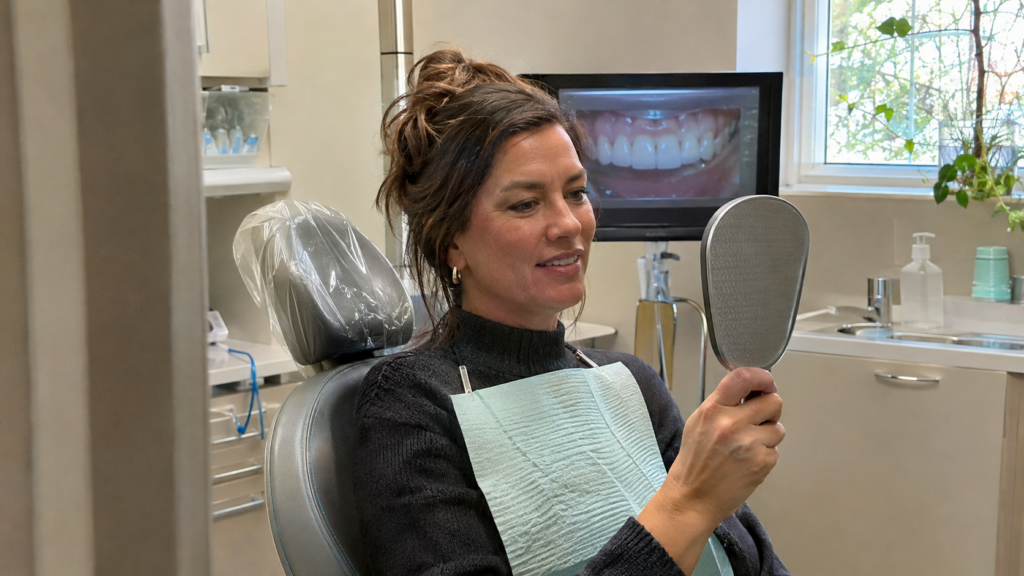
Temporary teeth also give you something to report beyond whether you like the way they look. Do certain words sound different? Does one area touch first when you close your mouth? Is a spot difficult to reach when you clean? Those observations can help your prosthodontist assess how the teeth work day to day and what may need to change in the final design.
What Is the Difference Between Temporary and Final Implant Teeth?
When replacing a full arch, meaning all the upper or lower teeth, the temporary set may be a single bridge that attaches to the implants. It provides replacement teeth during an early stage of treatment. The final implant teeth, sometimes called permanent teeth, are the set intended for long-term use. “Permanent” describes their role in the treatment plan. They still need daily cleaning and professional follow-up, and they may need repair or replacement over time.
| Temporary implant teeth | Final implant teeth | |
| Role | Provide an interim set during healing and allow the dental team to evaluate the design. | Provide the set intended for long-term use. |
| Fit and design | May be adjusted as needed while the dental team monitors healing and gathers feedback. | Can incorporate findings about fit, speech, appearance, bite, and access for cleaning. |
| Day-to-day care | Follow the eating and cleaning instructions for the healing stage. | Follow the maintenance plan for the final design and keep recommended follow-up visits. |
The two sets may look similar, and both can be planned from the start. The temporary phase gives the dental team a chance to see how the design works in your mouth before finalizing it.
What Can Temporary Implant Teeth Help Evaluate?
Prosthodontic care focuses on how replacement teeth look, feel, and function together. During follow-up visits, a prosthodontist may use the temporary restoration to assess several details that are hard to judge from a model or scan alone.
Speech and tooth position
The position and shape of the front teeth can affect how the tongue and lips form certain sounds. If an “s” sounds different or a word feels harder to say, note a few examples for your follow-up visit. The prosthodontist can check whether the shape or position of the teeth may be contributing. It’s also a chance to discuss how much tooth shows when you speak or smile, while there’s still time to refine the final design.
How the teeth meet
A prosthodontist can check how the upper and lower teeth meet and whether one area takes more pressure than intended. If one side seems to touch first or your bite feels different from one day to the next, tell the dental team. They can check the temporary set and decide whether it needs an adjustment or whether the observation should inform the final design. Avoid testing the bite with hard foods while you’re healing.
Access for cleaning
The shape of a fixed bridge affects how easily you can reach the area where it meets the gums. If a spot is hard to see or reach with the cleaning tool you were shown, ask the dental team to check your technique and the shape of the bridge. That conversation can help identify what needs attention before the final teeth are made. It’s also a chance to practice the cleaning routine you’ll use at home.
What Determines When the Final Set Is Ready?
Same-day temporary teeth depend in part on how firmly the dental implants are held in the bone at placement. That initial stability is different from the connection that develops as bone heals around the implants, a process called osseointegration. An implant can be stable enough for a temporary set in a suitable case and still need time to heal before the final restoration is attached.
The dental team considers implant stability and how the surrounding tissues are healing. As the gums change shape during healing, the team may need updated scans or impressions to capture how the final set should fit. They can also use what they learned from the temporary teeth to refine the bite, tooth position, or shape near the gums. After placement, the final set is checked for fit and how the teeth meet.
The temporary set can serve as a reference for what to keep as well as what to change. For example, you might like the way the front teeth show when you smile but find the area behind them difficult to clean. Those are two separate details. The prosthodontist can use the tooth position as a reference while assessing whether the shape near the gums should change. It’s worth asking which features the final set is expected to carry over and which ones may differ in shape or material.
There’s no single timeline that applies to everyone. If immediate temporary teeth are not appropriate, ask before treatment what the alternative would be and what you can expect to wear during healing. The ability to place implants and the ability to attach temporary teeth that day are separate decisions.
Eating, Cleaning, and Follow-Up With Temporary Teeth
Having teeth in place on the day of surgery doesn’t mean you can return to your usual diet that day. Follow the eating and cleaning instructions from your treating dental team. Ask what textures are appropriate, how to clean around the temporary set, and when those instructions may change. Guidance can differ depending on your surgery, the type of temporary teeth you have, and how you’re healing.
Keep follow-up visits even if the teeth feel comfortable. If the temporary set feels loose, becomes damaged, or you develop unexpected pain or a change in your bite, contact the treating dental team promptly. Don’t try to tighten or repair it yourself. After the final set is placed, ask for a demonstration of how to clean around it and what the team will check at maintenance visits.
Questions to Ask at a Same-Day Smile Consultation
Knowing what happens after the initial visit can help you compare plans and prepare for treatment. Consider asking:
- What could be placed on the day of surgery? Ask whether the plan calls for a fixed temporary set and what the alternative is if it can’t be attached that day.
- What feedback should I bring to my follow-up? Ask what changes in speech, bite, appearance, or cleaning access are useful to note.
- How will the dental team know when I’m ready for the final teeth? Ask what needs to be evaluated and how the temporary set may inform the final design.
- How will I care for the final set? Ask which tools to use at home and what ongoing professional maintenance involves.
The temporary and final sets serve different purposes. Understanding what each is designed to do can make the treatment plan easier to follow and help you ask more specific questions at each visit.
Request a Consultation with Princeton Prosthodontics and Dental Implants in Princeton, NJ, to discuss which approach may be appropriate for you.